Nike Might Have Already Found One Of Its Best Rugby Opportunities - So Just Do It Already…
(Images used for editorial commentary; rights remain with their respective owners.)
Nike has already put its Swoosh on Ealing Trailfinders. The bigger opportunity is what sits underneath it.
Nike's new multi-year teamwear partnership with Ealing Trailfinders is interesting for a number of reasons, not least because it marks a return for the brand to professional UK club rugby. But I think there is a much more interesting strategic question hiding underneath the announcement.
Has Nike acquired access to a significantly more valuable sporting asset than the current partnership recognises?
I spent almost 15 years at Nike, working across categories including football, basketball, tennis, golf, skate, cricket and American football. It was a category-led organisation then, and one of the disciplines that experience taught me was to look beyond the obvious sponsorship inventory and ask what strategic role a sporting property could actually perform for the brand and the business.
That is what makes Ealing interesting.
If you evaluate Trailfinders conventionally, the limitations appear quickly. The men's team plays in the second tier of English rugby, the ground holds around 5,400 people and the club's digital audience, while strong relative to its Championship peers, is hardly going to trouble Nike's global media dashboard. First Five's August 2026 analysis puts the men's combined audience at approximately 69,600 across five major platforms, third highest among the 14 Championship clubs assessed.
If the objective is simply to buy reach, there are hundreds of larger sporting properties Nike could choose.
But that is precisely why reach is the wrong lens through which to value this opportunity.
The most valuable asset may not be the audience Ealing has today, but the sporting ecosystem it gives Nike access to
The conventional sponsorship model tends to place the professional team at the centre and value everything radiating out from it: broadcast audiences, supporters, social followers, hospitality, shirt visibility and so on.
Ealing becomes considerably more interesting if you reverse that logic.
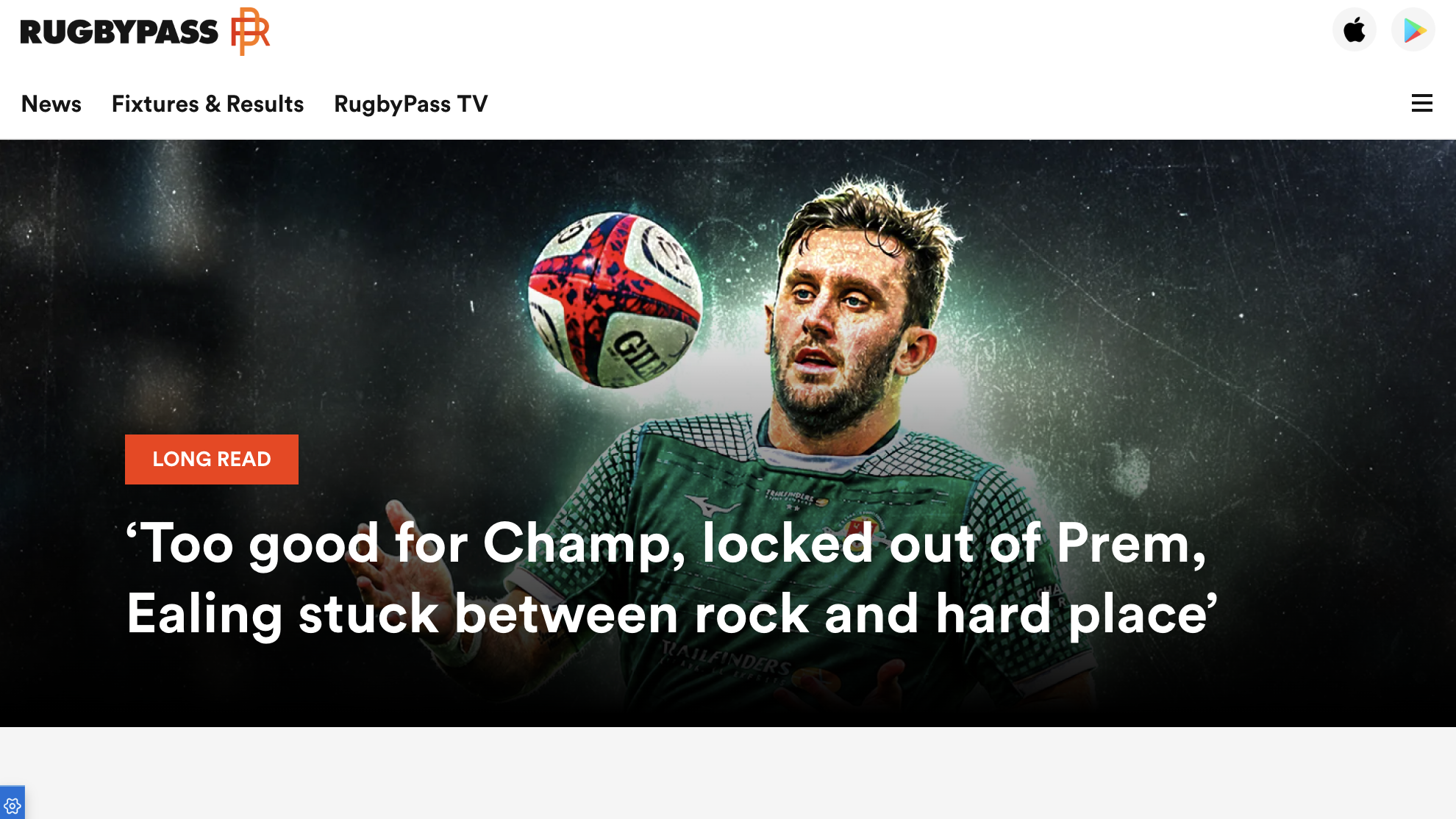
Rather than seeing a Championship rugby team with some ancillary community activity, consider it as a West London sporting ecosystem which happens to have professional rugby at its apex.
There is an elite men's programme, a top-flight women's programme, a significant high-performance operation, an academy pathway, university relationships, girls' development, grassroots club connections, schools activity, community programmes and a substantial history in minis and junior rugby.
Historically, Ealing described itself as the UK's biggest community rugby club, with more than 3,000 members at its peak, including around 750 minis and juniors. Today, its wider structure includes the Trailfinders Rugby Academy with Brunel University, a Girls Rugby Club Hub, schools programmes and an emerging Partner Clubs Programme.
Those assets should not simply be viewed as evidence that Ealing is a nice community club.
Commercially, they represent multiple points of access to athletes, coaches, parents and sporting communities at very different stages of their relationship with sport.
For Nike, that distinction matters.
Ealing offers Nike something more valuable than association with successful athletes: access to athletes while they are still becoming successful
Sports marketing naturally gravitates towards the finished product.
Brands pay substantial premiums for athletes, teams and competitions once they have accumulated fame, followers and cultural relevance. The economics are understandable because those assets provide immediate distribution.
The trade-off is that every competitor can see them too.
Ealing presents a different proposition.
Its men's team has won three Championship titles in four seasons and then completed the 2025–26 regular season with 26 wins from 26, finishing 30 points clear of second place. Its failure to reach the Premiership has been determined by minimum operating standards around its ground rather than an inability to compete on the pitch.
That creates an unusually valuable sporting tension: this is an elite performance environment that has not yet acquired all the commercial characteristics or price tag of an established Premiership property.
At the same time, Trailfinders Women already compete at the highest domestic level and have reached the Premiership Women's Rugby finals.
Underneath both sits the development pathway.
This gives Nike the possibility of building relationships with athletes before they become established stars rather than continually paying the market rate to borrow their relevance afterwards. From a brand perspective, there is authenticity in being present during the journey. From a commercial perspective, there is potential lifetime consumer value. From a sports marketing perspective, there is the possibility of identifying and developing future athlete relationships within an environment the brand already understands.
Those three things together are significantly more interesting than another logo placement.

The performance environment may be one of the most commercially under-appreciated assets in Sports Marketing
There is another part of the proposition that deserves more attention than it would receive in a conventional sponsorship valuation: the people behind the athletes.
High-performance sporting environments contain extraordinary concentrations of specialist knowledge. Coaches, strength and conditioning practitioners, sport scientists, analysts, researchers and medical professionals spend their careers understanding how athletes train, move, recover and perform.
For a sportswear company, access to that expertise should have strategic value.
A deeper Ealing relationship could therefore be structured not only around marketing rights but around product and programme development: wear testing, athlete feedback, rugby-specific performance insight, female athlete research, training innovation and the development of new sporting experiences.
This changes the role of the partnership.
Ealing stops being somewhere Nike promotes finished products and becomes somewhere Nike can potentially help create better ones.
That is particularly relevant because the infrastructure already exists. Trailfinders Sports Ground is an 18-acre sporting site whose redevelopment involved approximately £13 million of investment, and it now includes multiple rugby pitches alongside cricket, tennis, netball, academy and community facilities.
Nike would not be starting with a blank sheet of paper. It would be connecting its capabilities to an existing high-performance and participation environment.
Women's rugby makes the opportunity materially more valuable
It would also be a mistake to treat Trailfinders Women simply as an additional set of sponsorship rights within the same agreement.
Women's rugby represents a structurally different growth opportunity.
The women's team gives Nike immediate access to top-flight domestic competition and an environment containing international-level talent, while the wider Ealing ecosystem creates connections further down the female pathway through girls' rugby and university development.
That creates the possibility of participating across the growth curve rather than arriving only at its commercially mature end.
This distinction is increasingly important as more brands move into women's sport. Simply being present is becoming less differentiating because sponsorship inventory follows attention. The more defensible position is to become useful to the ecosystem itself: helping improve participation, athlete experience, coaching, product development and progression.
For Nike, Ealing potentially provides both ends of that equation in one place: elite female athletes who can establish credibility and emerging female athletes with whom the brand can build future relevance.

Then there is the geographic advantage
None of these assets exists in isolation. They sit in West London.
That should materially alter the commercial assessment.
The relevant market is not simply the number of people willing to buy a ticket to watch Ealing Trailfinders. The broader opportunity is the network of sporting households, schools, universities, grassroots clubs, coaches and participants that can potentially be reached through Ealing's activities and relationships.
This is where I think sports rights holders and brands too often confuse audience size with addressable market.
A supporter watching a professional match is valuable because they provide attention. A family with children participating in sport can be valuable for an entirely different reason: they repeatedly purchase footwear, training apparel, equipment and lifestyle products over many years.
A young athlete entering the Ealing ecosystem might encounter the club through a school programme, play at a minis tournament, progress through grassroots rugby, interact with an academy programme, attend university and remain involved in sport as an adult, parent or coach.
Nike does not need to own every stage of that journey for the economics to become interesting. It simply needs the partnership to create a measurable increase in product trial, membership, preference and repeat purchase across enough of those touchpoints.
That is a customer acquisition and lifetime value argument, not an impressions argument.
The financial structure of Ealing makes this more interesting…
Ealing's unusual ownership and funding history adds another dimension.
The club and its facilities have benefited from substantial long-term private backing. At the same time, Ealing's publicly stated position on promotion has been notably financially conservative: it has resisted the idea that it should make speculative, debt-funded stadium investments without sufficient certainty around the reward for doing so.
That combination is interesting.
There is ambition and access to capital, but the available evidence does not suggest an organisation recklessly pursuing status at any cost.
For a potential strategic partner, that matters because the opportunity is not predicated entirely on Nike funding the growth of the underlying property. Much of the expensive infrastructure, sporting capability and organisational ambition already exists.
Nike's investment can therefore be directed towards exploiting and connecting assets rather than creating all of them from scratch.
The recommendation is not simply "spend more money with Ealing"
This is the important bit.
The conclusion from all of this should not be that Nike turns a teamwear agreement into a conventional sponsorship agreement, adds some cash and negotiates a larger bundle of rights.
That would be missing the same opportunity, just more expensively.
The better starting point would be a joint strategic asset audit.
Map the professional teams, athlete pathways, practitioners, research capabilities, facilities, university relationships, schools, grassroots clubs, community programmes, events, digital audiences and geographic catchment.
Then map those against the business problems Nike actually wants rugby to help solve.
Where does Nike want greater product penetration? Which consumers does it want to acquire? Where does Nike Membership fit? What does the brand want to achieve in women's sport? What product insights does the rugby category need? Where can Nike create experiences competitors cannot easily replicate? Which future athletes could emerge from the system? What role should London play in Nike's rugby strategy?
Only once those questions have been answered should the partnership architecture be designed.
That is the difference between buying rights and creating strategic advantage.
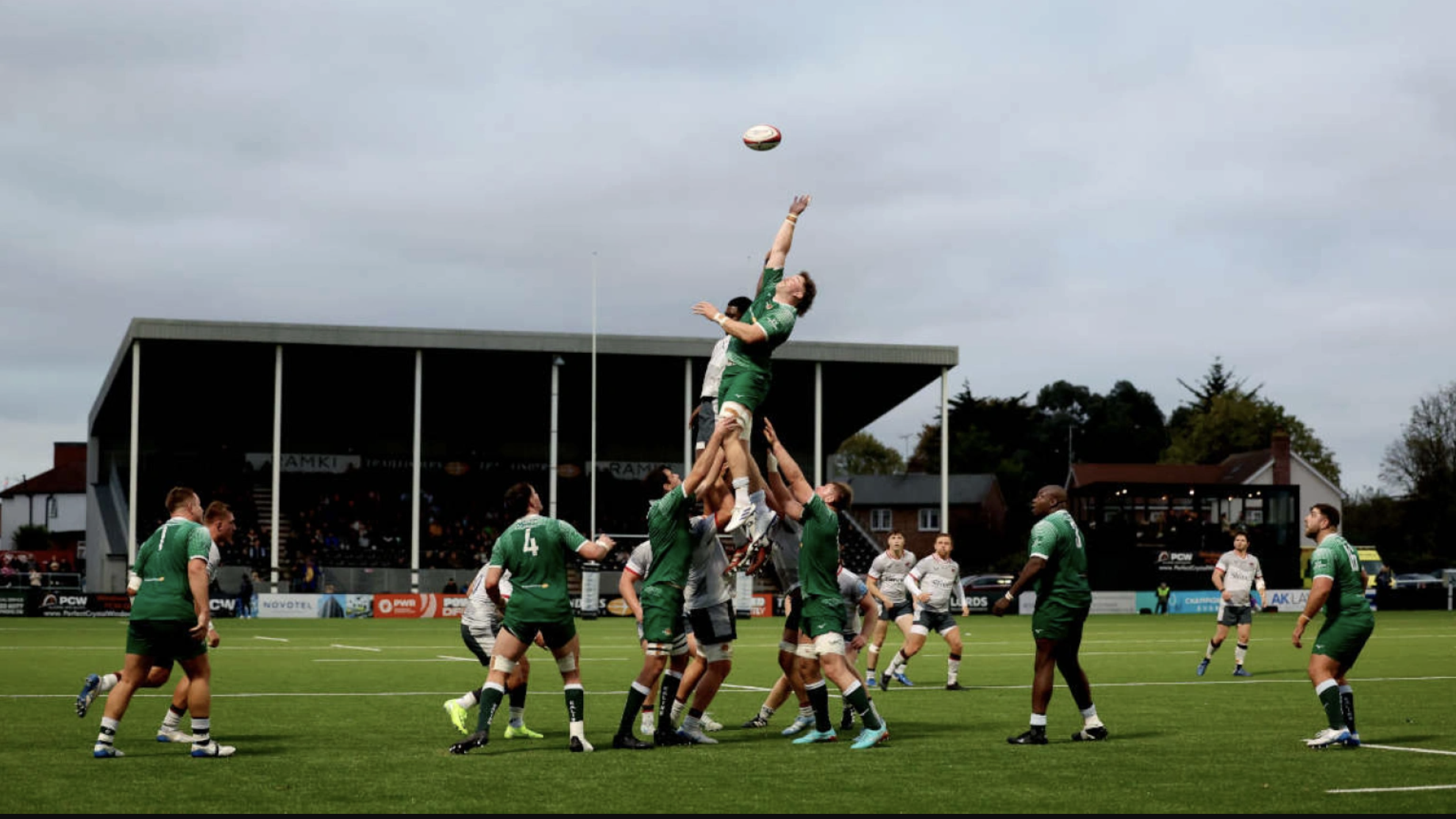
The best partnerships should create something competitors cannot simply buy next year
This is ultimately the commercial case for looking again at Ealing.
The largest sports properties offer enormous reach, but reach is available to whoever can afford the next rights cycle. Their value is obvious, which is precisely why it is expensive.
The more interesting strategic opportunities are often assets whose future value is not yet fully reflected in their current market price.
Ealing has an unusual collection of them.
A men's team producing Premiership-level sporting arguments without Premiership status. A women's team already competing at the top level. A serious performance environment. Athlete development pathways. University infrastructure. Grassroots and community reach. A history of substantial private investment. A physical base in West London. And a genuinely distinctive sporting tension created by repeatedly winning a competition without being permitted to progress through it.
Individually, none of those makes Ealing indispensable to Nike.
Collectively, they create something much harder to dismiss.
Nike has already taken the first step by putting the Swoosh into the ecosystem.
The strategic opportunity now is to stop evaluating Ealing according to what it is worth as a Championship rugby club and start asking what it could be worth as a platform for consumer acquisition, athlete development, product innovation, women's sport and rugby category growth.
That is a much bigger commercial question.
And potentially a considerably more valuable answer.
The smartest sports partnerships are rarely the ones where a brand pays the most money to stand next to the biggest audience.
They are the ones where the brand recognises an undervalued asset, understands what makes it unusually useful, and builds something around it before everyone else notices.
Nike may already have found one - It just needs to recognise what it has.
In my opinion anyway…
Image disclaimer: Images used in this article are included for editorial, commentary and illustrative purposes only, with no claim of ownership or endorsement intended. Every reasonable effort has been made to identify and credit original rights holders; if you own the rights to any image and would like the credit amended or the image removed, please contact First Five Marketing and I will do so promptl