Why Crowded Markets Still Make Room for New Brands
(…and what founder-led businesses need to protect as they grow!)
If you know me, you know it is no secret that I am falling back in love with the surf industry.
Now I am older, wiser (and slower), it has also become a market that helps me crystallise ideas about clarity, growth and what good brands need to become durable businesses.
The surf brand market is one of the most crowded I know. By any conventional reading, it is saturated. And yet new brands appear almost weekly - and a meaningful number of them work.
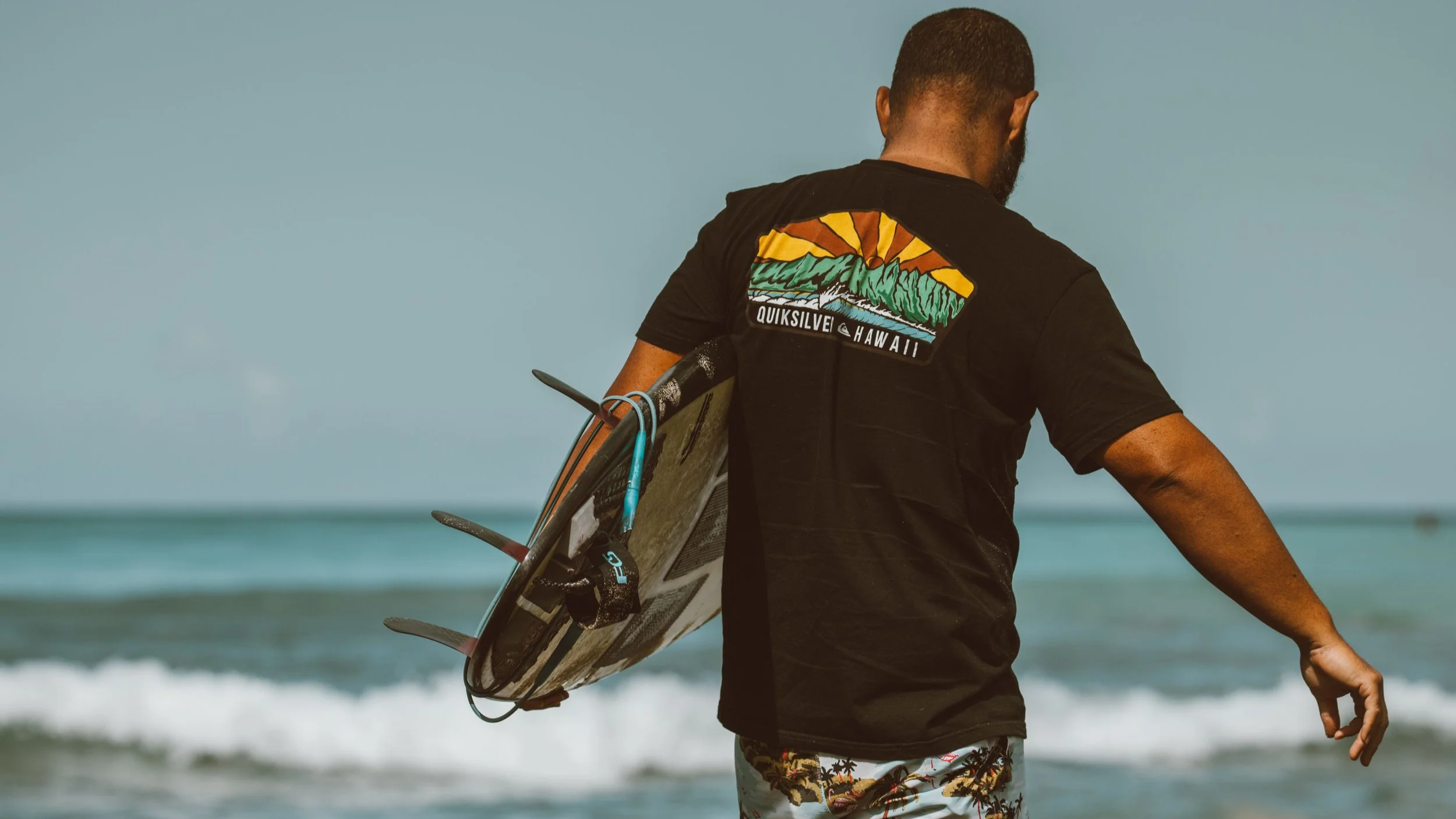
That should not happen. It makes no sense.
In most categories, saturation closes the door. Surf keeps making room, much like coffee, beer and other craft-led industries where affinity matters as much as utility.
What is interesting is how these new brands get in.
Not with radical design, new materials, clever business models or pricing plays. Most print on the same blanks, from the same suppliers, at roughly the same prices as everyone else.
What they do arrive with is an extraordinary depth of understanding of a specific community, and a belief about it they have lived rather than researched.
Logically, that should not be enough. Commercially, it often is.
When every product does the same job, to the same standard, for roughly the same money, the rational basis for choosing disappears. People move to emotional and cultural ground: What does this say about me? Who else wears it? Do these people understand something I recognise as true?
Functional parity is a real problem. It just is not the fatal one.
You need enough parity to feel credible. Advantage then comes from clarity about the affinity you are building, consistency in expressing it, and adherence to the cultural rules agreed between founder and community.
That is why the market keeps making room. The barrier is not always capital or capability. It is clarity - and a two-person brand can have more of it than a listed one.
Distinctiveness here is not about being different for the sake of it. It is about how quickly the right person encounters you and thinks: That is for me what separates the brands that last.
The difference is narrow, and harder to hold as the business grows.
First: An unmistakable clarity about what the affinity is actually built on.
Not “we make good boards.” But “we’re building for people who value depth over volume” or “we’re for the generation that learned to surf during COVID and now see the ocean differently.” Specific. Lived. True.
Second: Relentless consistency in how it is expressed - everywhere, not only in communications.
This is where most brands fail. They’re clear about the affinity in their marketing, but unclear in their hiring decisions. Clear in their messaging, but inconsistent in their product choices. Clear in their founding story, but vague about who actually gets to make decisions as they grow.
Third: Strict adherence to the cultural rules agreed between the founder and the community.
This has to hold true no matter how big the brand becomes or who else is invited to join. This one is where nearly everyone fails. It is also the one almost nobody writes down.
Founder-led surf brands are exceptional at this, often without a strategy document. The founder is in the water, at the shop, in the comments, at the comp. They are the community, so the signal is authentic and immediate.
That is real competitive advantage, simply carried by a person rather than a brand.
The rules are being kept perfectly. They are just kept in one person's head and enforced by that person being everywhere.

The question that decides everything
Does affinity still form when the founder is not in the room?
Early on, the honest answer is no. And that is mostly fine, until it becomes a problem.
It stops being fine at a recognisable moment. The first hire who is not a mate. The first stockist in a town the founder has never surfed. The first outside money. The point the founder can no longer be present for every judgement about what feels right.
Before that point, intuition is faster than any framework, and imposing one can be painful - believe me, I have tried. After it, intuition stops transmitting. It stays in one person's head while the business makes decisions without a shared north star.
The work is not to make the brand more distinctive. It is to make what already exists transmissible, so a new hire, stockist, designer or partner can make the founder's call for the same reason.
That is the point at which growth becomes dangerous.
Protecting a growing brand from dilution
Surf brands are often born differently. Not from a gap in a price ladder, a workflow headache or an innovation opportunity, but from personal belief and a cultural need someone felt themselves.
That origin sets the operating model. They grow by going deep, earning the right to sell more to the same people rather than acquiring endlessly at rising cost.
It is a good model: low acquisition cost, high retention, real margin and customers who do the marketing.
It also explains why the category is not as cut-throat as others. Most founders simply want to serve their part of the community better than anyone else. But when momentum arrives, the advice is almost universally an acquisition playbook: widen the funnel, broaden the appeal, soften the language. Reach, reach, reach.
That advice is structurally wrong for a brand built on belief. It forces dilution.
Dilution is not caused by getting bigger. It is caused by changing the terms of membership for people who arrived late.

There are two honest routes
If the acquisition playbook is wrong, what is left? Two things.
The first: Go deeper.
Take a larger share of the same community's life: more categories, occasions and more of the year. Earn more from people who already believe you.
The second: Go wider.
Take the belief somewhere new. Not to a bigger, blander audience, but to a different community that shares it.
This second move is often most overlooked, but done well, it can scale without unnecessary brand cost. Belief can travel when the principles are clear.
Patagonia did not grow by becoming vaguer. It found more people who already felt that way but had not found somewhere to belong.
A brand's specificity is not a constraint. It gives expansion a consistent route to follow.
That route is only available to a business that knows what it believes precisely enough to recognise it in a community it has not met yet.
What this actually says about Brand
I find something genuinely encouraging in all of this.
A market where belief remains a viable entry strategy is healthier than one where only capital or reach can compete. But viable entry and durable business are different things.
The gap is rarely closed by “more marketing”, it’s by turning a founder's idea into something the whole business can carry. Clarity does not only help these brands enter crowded markets, it stops growth destroying what made them worth choosing in the first place.
Brand strategy is not a marketing exercise. It is how leadership protects competitive advantage as a business grows.
In a saturated market, where functional parity is assumed, the only competitive advantage that survives scaling is the one that’s been made transmissible.
That requires:
Getting clear on what the affinity is actually built on (and writing it down)
Building systems where new team members understand not just what to do, but why
Making cultural rules explicit so they can be enforced consistently
Choosing growth routes (deeper or wider) that honor the original principle rather than abandon it
The surf industry is full of examples of brands that nailed this. It’s also full of examples of brands that didn’t -that got bigger, lost themselves, and faded.
First Five helps leadership teams clarify who they are, who they serve, what makes them different and how the business should express it consistently.